Tyger Tyger, burning bright
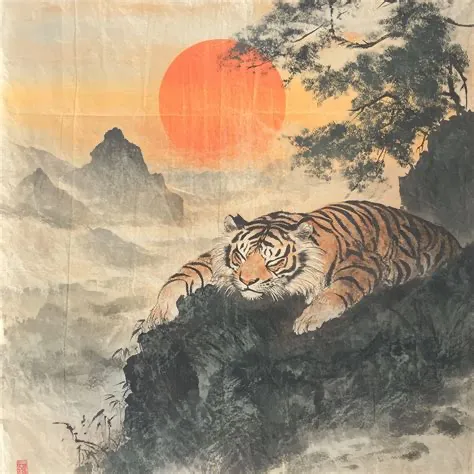
Tyger Tyger, burning bright,
In the forests of the night;
What immortal hand or eye,
Could frame thy fearful symmetry?In what distant deeps or skies,
Burnt the fire of thine eyes?
On what wings dare he aspire?
What the hand, dare seize the fire? 1
Once a year, my company rents out the entire zoo for an “employee night”. If you’ve read anything I’ve ever written, you’re probably surprised that I would show up to anything work-related after 5pm, but trust me, this is different. The Houston Zoo is typically a shit-show – school field trips, unruly Houstonians, oppressive heat, and overpriced food. So, the opportunity to wander around after sunset (sans crowds, avec free dinner) is hard to pass up.
We walked the enclosures, stopping occasionally to make small talk with colleagues. It’s always interesting to see how people look in “civilian attire”. The uptight HR lady lets loose after hours, apparently. The highlight of the night was watching a Northern White-Cheeked Gibbon chase a rabbit through his enclosure. He noticed it while still high on a perch and acted all nonchalant, making his way to the ground and skirting the fence to make his approach. The rabbit was too sharp for the usual primate tricks and took off. Watching the gibbon run after him on two legs was a bit uncanny.
My happy, carefree night ended at the tiger enclosure. I like big cats, but it wasn’t quite what I expected. He was unwell. Not in the physical sense – his coat draped a heavily muscled frame – but rather, in his spirit. I’m no whisperer, but I tell you, I made eye contact with that tiger and the distress was palpable. No one else seemed to notice.
Have you ever experienced (or been around someone) with acute anxiety or OCD? The frantic aura is contagious. It was like that, as he paced back and forth against the length of the glass, working his jaw, eyes wild. Everyone just ooh’d and ahh’d, but I felt the discomfort to the point of nausea.
A male tiger usually has a territory of 60 to 150 square kilometers. They roam incredible distances to hunt and mate. That freedom is a part of their being. And there I stood, watching this majestic creature self-destruct in captivity.
I later learned a term for what I’d witnessed:
zoochosis; noun. zü-ˈkō-səs
an abnormal condition of captive animals that is characterized by repetitive sometimes self-destructive behaviors (such as pacing and over-grooming) and is held to be caused by the stress of captivity.
You can probably guess the etymology of the term – zoo + psychosis. It was coined in 1992 by an animal rights activist and has since been used to argue for the abolishment of zoos.2
But that’s not the direction I went with it. No, I’m more selfish than that. While I pitied the tiger, my mind ran with the concept and applied it to humanity.
Out of place, out of our mind
As a species, we’ve done everything in our collectively prodigious power to separate ourselves from nature. We pour concrete over the earth, we poison the air we breathe and the water we drink, and we box ourselves into little hovels made of chemically treated pine and sheetrock.
How many of us still have the time, the means, or hell, even the inclination to get outside anymore? If you were dropped into the wilderness, could you forage, find clean water, make a shelter to escape the elements?
Sure, that knowledge still exists in books and videos, but I’m suggesting that we’ve lost an intuitive sense of natural functions. Everything is synthetic, digital, disposable. I mean, sometimes I only remember that I’m an animal when something starts to hurt. I realize in moments of distress the interconnectedness of all things, my lowly and arbitrary place in Indra’s Net.
And just like that tiger in his cage, we become neurotic, self-destructive. The hedonist and the ascetic, it’s the same shit, just another escape attempt. We’re so disconnected from what it means to be this human animal that we cling to anything that will give us meaning, however fleeting.
What, then, does it mean to be human? That, my friends, is the perennial question and greater minds than my own have stared into that abyss to no avail. Do you expect this poor fool to make any progress?
For now, it suffices to say that we should all get out more. Disconnect. Hike uphill. Breathe the cold, clear scent of cedar, hear the trickle of melting snow, roll an ankle on a rock that definitely wasn’t there when you last looked.
That settles it. When I have time off again, I’m heading to the mountains. It’s been far too long.
Blake, William. "The Tyger." Songs of Innocence and of Experience, 1794.↩