Apparatchik
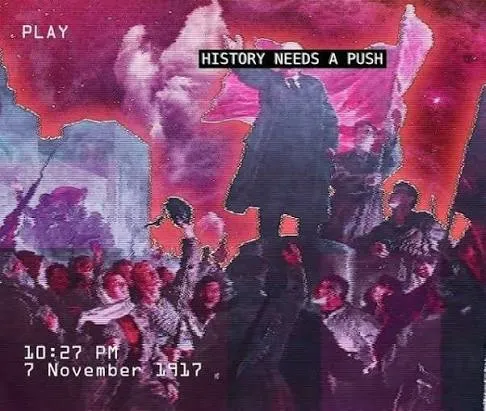
I was bored at work and made the mistake of asking a bunch of tankies why their flavor of socialism never worked.
Such discourse is rarely productive, but it did get me thinking. My level of political awareness changes with the seasons. When passions run hot, I’ll be deep in study and engaged with the front lines. At other times, I’m apathy incarnate.
Today I found myself at an ideological crossroads, an outsider trying to understand the nature of the divergence. To my right, the Marxist-Leninists (MLs) of the ‘Vanguard’ variety. They advocate for a strong group of educated proletarians to serve as the tip of the spear, meant to topple the capitalist machine and hold the line until the workers can take charge.
On my left, the anarcho-syndicalists, who see the vanguard as just another cage. They say the worker already possesses the ultimate revolutionary tool: the labor union (or syndicate). No top-down economy, no separating the revolutionary from the shop floor by making them a bureaucrat or clerk. Horizontal authority, temporary and recallable.
I’ll admit that my initial sympathies lie with the latter. The MLs would likely say that it’s impossible; the proletariat has been systematically undereducated, overworked, and beaten down. They cannot simply spontaneously revolt and maintain control. While I would point to the Paris Commune or revolutionary Catalonia, they would say, “Yeah, but look what happened.” The capitalist machine is a highly organized, heavily armed, technologically advanced apparatus with professional standing armies, secret police, intelligence agencies, and trillions of dollars. How can a union of workers stand against that alone?
But then I ask, where has the vanguard model actually worked? The vanguard is an incredibly effective hammer for smashing an old regime. The unresolved historical problem is that the hammer has never proven capable of turning itself into a house. The professional revolutionaries suddenly become something else entirely. Their material reality changes from "oppressed worker" to "state manager," and their primary incentive shifts from dissolving the state to preserving their own power.
I don’t know how to reconcile these views, or if it’s even possible to do so. I think a revolution needs something like a vanguard – the working class needs time and support to transition from oppressed to self-sustaining – but history offers too many examples of the reality of human nature and the corrupting influence of political power.
Where does that leave me now? Beats me, man. I’m just counting the days to Mexico.