2Q26
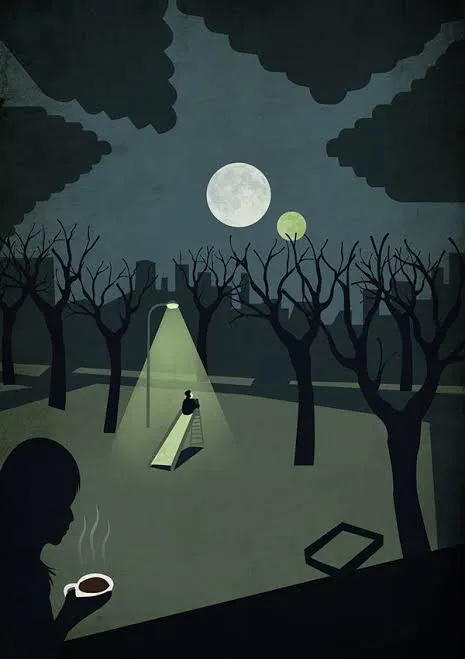
Looking up, Tengo saw two moons floating in the sky. One was the familiar large, yellow moon he had always known. The other was a smaller, irregularly shaped green moon, like a misshapen twin.
They hung together in the dark night air, quiet and motionless, as if they had always been there.
This is no longer the world I knew, Tengo thought. The world has shifted course, like a track switched at a railway junction. I have entered a world with two moons...
The world we are in now is not a dream. It is real. But it is a different reality from the one we were in before. A world where two moons float in the sky. A world where the rules have changed, even if we do not yet know what those rules are.1
In Haruki Murakami’s 1Q84, seemingly mundane choices subtly shift the main characters into a different timeline. Aomame is stuck in Tokyo gridlock when a taxi driver suggests an unusual escape: descending an old emergency stairway leading down from the elevated highway. He explicitly warns her that doing so might change her perception of reality.2
Tengo’s entry is gradual; it happens while he ghostwrites Fuka-Eri’s novella. His consciousness slowly aligns with the prose until he realizes he is physically present in that reality.
Sometimes I wonder if the same thing happened to me.
Last year, I boarded the QM2 for a transatlantic voyage from Southampton to New York City. I was returning to the US after five years abroad and the cruise was significantly cheaper than a flight, believe it or not. I had a romantic vision of waking up to the Statue of Liberty, arriving home in the same manner as my destitute German ancestors.
In reality, I stepped from the gangway into a land at war with itself. A cold civil war. One in which Christian nationalists openly and proudly plotted the end of our democracy, useful idiots for the oligarchic class. Project 2025, red heifer initiatives, and a clear trajectory toward tyranny.
Like Tengo, I’m in a world where the rules have changed. I can recall a time when the Abrahamic religions seemed to be losing their grip on society. Presidents were talented at rhetoric and foreign affairs. The corrupt had the decency to hide their misdeeds.
But I’m not there anymore. The rules have indeed changed.
Maybe I need to get back to NYC and board the QM2, this time heading east. Somewhere in the North Atlantic, there must be a door. With any luck, I can get back to the reality I once knew.
Murakami, Haruki. 1Q84. Translated by Philip Gabriel and Jay Rubin, Knopf, 2011.↩
The title is a clever pun: Q = kyū = 9, where the Q also stands for a question mark. They find themselves in an unstable, questionable version of the year they thought they were living in. Doesn't work with my post title, but I'm running with it anyway.↩